
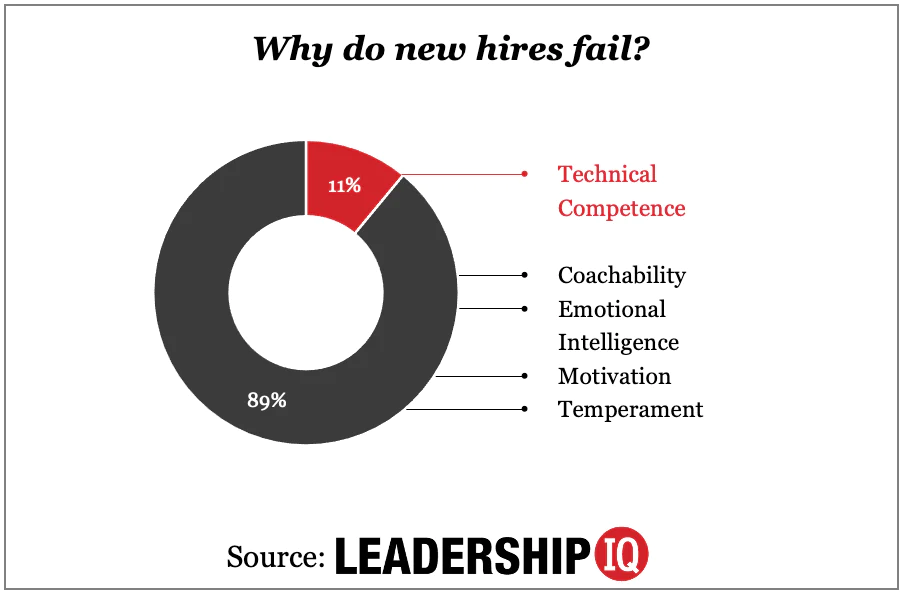
As mentioned in an Article by Forbes.com, in the dynamic landscape of talent acquisition research conducted with 20,000 new hires, the alarming statistic that 46% of new hires fail within the first 18 months has become a cause for concern among employers and HR professionals.
More than the surprising failure rate, was that new hires failed 89% of the time due to attitudinal reasons and only 11% of them lacked the skill set. The attitudinal deficits that doomed these failed hires included :
-
Coachability
-
Emotional Intelligence
-
Motivation
-
Temperament
Now the good news is that all these major reasons can easily be resolved through handwriting analysis thus saving a lot of time, effort, energy and money.
-
Coachability:
Meaning – Willingness and ability of an individual to receive and apply feedback for improvement.
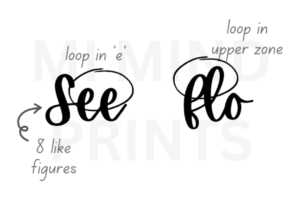
Handwriting Stokes – A coachable individual often exhibits traits such as flexibility (8 like figures), an openness to new ideas (upper zone loops) and willingness to hear (loop in ‘e’).
This might also be reflected in the presence of rounded letters, consistent spacing between words, and a moderate slant. These features may suggest a person who is amenable to guidance and can easily adjust their approach based on constructive input. On the contrary, rigid or overly stylized handwriting with sharp angles may indicate resistance to change and a reluctance to accept coaching.
-
Motivation:
Meaning – The driving force that influences and directs behaviour toward a goal or desired outcome.
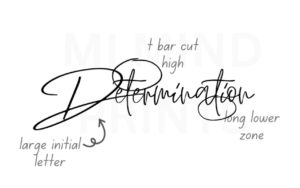
Handwriting Stroke – The intricacies of handwriting often unveil clues about an individual’s drive, ambition, and perseverance. A highly motivated person may exhibit characteristics such as goals set high (high cut t-bar), letters going down straight in the lower zone showing determination, big sized initials showcasing healthy confidence.
The size and spacing of letters can also provide insights into one’s level of motivation. On the other hand, inconsistent pressure, irregular spacing, and a lack of uniformity in handwriting may point to wavering motivation or a tendency to be easily discouraged.
-
Emotional Intelligence:
Meaning – The ability to recognize, understand, and manage one’s ownemotions, as well as effectively navigate and respond to the emotions of others.

Handwriting Stroke –
Emotional intelligence is often reflected in the way a person expresses themselves on paper. Those witha high level of emotional intelligence may exhibit characteristics such as well-modulated pressure, smooth and flowing strokes, and consistent letter slant.
These features may indicate a person who is in touch with their emotions, capable of effectively managing stress, and possessing strong interpersonal skills.
On the contrary, erratic pressure, abrupt changes in stroke thickness, or irregular spacing might suggest challenges in emotional regulation and difficulty in understanding or responding to the emotions of others.
-
Temperament:
Meaning – refers to inherent, enduring, and consistent patterns of behavior and emotional responses that are present from early childhood and have a biological basis.
Handwriting Stroke –
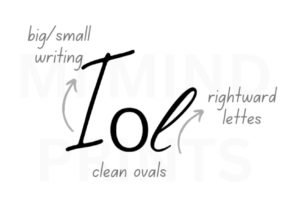
Various aspects of handwriting can offer clues about temperament traits such as extroversion, introversion(size of letters), patience, and impulsivity(extra rightwards letters).
For example, the size of letters and spacing between words may indicate whether a person is outgoing and sociable or more reserved and introspective. The slant of letters, the pressure applied, and the overall rhythm of handwriting can reveal aspects of patience, assertiveness, or impulsiveness. A person with a consistent and measured handwriting style may suggest a calm and patient temperament, while erratic strokes may indicate a more impulsive nature.
Addressing the high rate of new hire failure demands a multifaceted approach that considers not only technical competencies but also the intricacies of human behaviour. Handwriting analysis, in conjunction with thoughtful recruitment practices and robust onboarding strategies, can provide a more comprehensive understanding of candidates, potentially reducing the percentage of hires that falter within the crucial first 18 months. By recognising and addressing the root causes, organisations can pave the way for more successful, long-term employment relationships.
To learn more about your handwriting follow @mi.mind.prints https://www.instagram.com/p/CxpklquPQOe/?utm_source=ig_web_copy_link&igsh=MzRlODBiNWFlZA==
GET YOUR WRITE REPORT NOW !! https://mi-mind.me/services/